Showing posts with label Perinatal choices series. Show all posts

Sunday, July 01, 2012

Perinatal choices: Womb with a view

It's been over two months since I have written on this subject. You thought I had given up, huh? Well, that thought crossed my mind, too!

But I'm back! And I really want to write on this topic because I do care about it a lot. Also, I have this nagging feeling in the back of my mind that if I published this post, Marcus will come.  So...we'll see, 'k? :)

Today, I want to continue with the pregnancy subtopic and discuss all the tests and scheduled exams that are done prior to baby being born.
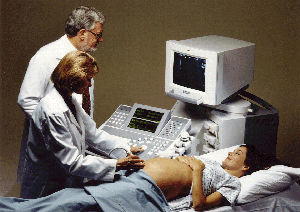
"Let's all gather around this machine that goes BING!"
In terms of tests and visits, there are many.  Some of them necessary, some of them are a matter of preference, and some of them are just kind of in the gray area.  To list a few:
  • Pregnancy test - urine, blood test, beta hCG. Which to choose?
  • Visits to your OB provider - when should they start? How frequently should you go?
  • All the blood draws & urine tests - what are they for and why do I need so many?
  • Glucose tolerance test (for gestational diabetes) - how 'bout I just skip this awful exam? Is that okay?
  • Genetic screening - which ones are really necessary? How do I know I'm "at risk"? How helpful is it to pursue a conversation with a genetic counselor?
  • Ultrasounds - how many should one need?  Are they necessary at all?
  • Group B Strep - I had strep earlier this year, does this mean I will give it to my baby?
  • Fetal fibronectin test - WTH?
  • Non-stress test - are they really necessary? What are they an indication of?
*phew*

These OB practitioners sure do like to poke and prod pregnant women!

Yes, there are lots and lots of tests available during pregnancy. In the interest of time, I will attempt to explore the genetic testing component more in depth-ish while only briefly discussing the others. Okay, go!

Popular practice vs. evidence
There are so many of these screening and monitoring measures. Most women (well, most women who have great insurance coverage) would be overwhelmed by all these tests. However, most women will just choose to go with whatever their OB provider recommends. Besides, they know best, right? ;)

What are our options? Let's take a look at the list of tests.
  • Pregnancy tests - Woohoo! You're pregnant!  Or...Doh! You're pregnant! Whichever the case may be for your family, most people find out through home pregnancy tests. Nothing wrong with that. For those who want to know with more accuracy, you can get a urine hCG test in the clinic. It'll detect hCG (a pregnancy hormone produced by the placenta) at a lower threshold than many over-the-counter home pregnancy tests. But it'll only be able to tell you whether you're pregnant. If you want to know how pregnant you are (that is, exactly how much of this hCG hormone is being produced...so that you might be able to determine whether the pregnancy is viable), you'll want to do a blood draw. The blood draws are done about 48 hours apart to see whether the serum hCG is increasing at a typical rate. There's more to this, of course, and you can read all about it here.
  • OB visits - Although some OB providers prefer not to see women until after 10 weeks gestation (due to the higher probability of early term miscarriages), most are happy to collect your insurance money as soon as you'd like to come in. The first visit would confirm the pregnancy with a urine test, discuss what to expect at this stage, and possibly explore your feelings about this pregnancy.

    Typically, OB providers will see you every 4 weeks until 28-32 weeks, then every 2 weeks until 36 weeks, then every week. If you follow that schedule and you start seeing an OB provider when you're about 6 weeks pregnant, you'd end up with about 14 visits (not counting ultrasounds and other tests). A study on the topic of how many antenatal visits are really necessary for low-risk pregnancies in developed countries showed that pregnancy outcomes are comparable for those who do 8-12 clinic visits vs. those who do 10-14 visits. Another multi-site study in various counties found that the new model of antenatal care with a median of 5 visits for low-risk pregnancies yields similar outcomes to the older model of the more typical visit schedule as listed above. Meaning, if your pregnancy is progressing typically, save some of your co-pay money and go get a pedicure!
  • Routine clinical procedures - A typical OB visit includes most of these: check history, physical exam, weight, blood pressure, urine dipstick for glucosuria and proteinuria, fetal heart tones, fundal height, palpation for fetal position (Leopold maneuver). Some providers will forgo the urinalysis part, but most of these procedures are pretty routine. Other monitoring measures that are routine will test for maternal blood & Rh type, antibody screening, CBCrubella titer (because of a high rate of birth defects associated with the disease), syphilis serology, chlamydia & gonorrhea, HIV, and pap smear...to name a few.

    Now, are all of these necessary? I would say that many of them are for the general population. If you are not promiscuous and you trust your partner, you may opt to forgo some of the venereal disease testing. Some tests that may be offered to low-risk moms that I think may not be necessary include getting a urine test every time you're in the clinic and getting a thyroid function test (since your levels are likely to be off during pregnancy anyway). Even though the other tests may be necessary, it is always a good general rule to ask, "What are these tests for and what would I do with the results?"
  • Glucose tolerance test - For some reason, women in pregnancy experience a phenomenon where they cannot process sugar as well as during their non-pregnant state. This is partially due to decreased secretion of insulin and partially due to insulin resistance. Women who are at high risk for developing gestational diabetes mellitus (GDM) include those who are obese (BMI > 35), have past history of GDM in previous pregnancies, have close relatives with type II diabetes, and/or have a history of unexplained poor pregnancy outcomes. Maternal age (>35), ethnicity, and socio-economic status also affect your likelihood of developing GDM. GDM can result in big ol' babies, increased c-section rate, increased risk of preterm delivery, and a number of other complications for moms and babies. Furthermore, kids who are born from GDM pregnancies are at an increased risk of developing diabetes themselves. That is why testing for this condition is so routine even though the prevalence is only in about 7% of all pregnancies. So...if you are amongst those who are at risk of developing GDM, it is a good idea to follow through and get tested. But if you are not at high risk, your provider shouldn't make you endure this awful test.

    Oh! And I recently discovered that instead of drinking the disgusting syrup, some providers have started to "administer" 28 jelly beans with comparable results! :D

  • Genetic screening (watch out, long section!) - First, let's establish the definitions of "test" and "screening":
    • Screening is a way to determine who is at risk and should consider testing. It is not diagnostic. It is not definitive. Example of a screening is the ultrasound measurement of the nuchal translucency.
    • Testing is the diagnostic study performed to determine if a condition exists. Examples of tests are chorionic villus sampling (CVS) and amniocentesis.
    There are lots of screens and tests that I don't really have time to go into. But you can read about them here: From the OB provider's perspective, screening and testing for genetic anomalies are aimed to accomplish a number of things: decreasing morbidity and mortality, being prepared for what is to come (for provider and family), and just having peace of mind. An evidence-based practitioner would offer genetic screening to all pregnant women. Many women choose not to utilize these screens and tests. Those who do get screened mostly do so because they want peace of mind and they want to know what to expect. Those who elect not to be screened make that choice because their babies may have low risk of having a genetic anomaly, they believe that they'd be too stressed out by a possible false positive, or they know the outcomes would not affect their action toward the pregnancy one way or another. Whatever you choose is up to you and your family. And if you have questions or concerns, talking to a genetic counselor is a good way to be better informed.

    This topic can be controversial and is a touchy one for many people. There are those who oppose genetic testing and they base this judgment on the possibility that those who find out about genetic anomalies in their fetuses would choose to abort. Famous people in the news who are vocal about this topic are Rick Santorum and Sarah Palin. Santorum (whose daughter has Trisomy 18) would argue that genetic testing leads to an increased rate of abortion and if he were president *shudder* he would work toward getting genetic tests off the list of procedures to be covered by insurance. Palin, from the same side of the political fence as Santorum, however takes a different stance. During her pregnancy with her youngest child, she elected to have an amniocentesis performed on her which revealed that there was a good chance her baby had Down Syndrome. This turned out to be true. Palin later
    told People magazine: “I was grateful to have all those months to prepare. I can't imagine the moms that are surprised at the end. I think they have it a lot harder.”

    I realize that abortion is a very sensitive subject (and one that is even more sensitive this year, being that it is an election year). This blog is not the forum where I will be discussing whether it is right or wrong to terminate a pregnancy. I will say that I know these two things for a fact: (1) abortion is legal, and (2) God doesn't hate you because of what you've done or because of whatever your view is...God loves you.
  • Ultrasounds - Typically, most providers will send you for one ultrasound in the middle of your pregnancy. The purpose of this ultrasound is to monitor and compare your baby's development vs. typical development at this stage. This is also a time when you can most likely find out the sex of the baby should you choose to.

    Aside from the typical mid-trimester ultrasound, here are some other times your provider might send you in for a scan:
    • Transvaginal ultrasound for the diagnosis of an intrauterine pregnancy - Making sure there's actually a baby in there in the wee early term. (Or, rarely, making sure that there isn't embryonic growth outside of the uterus for some reason.) I've seen this ordered far too many times for women who are just curious to know if there is a gestational sac in there and if they're really pregnant. It's nice to know, but it does not change the fact that  it doesn't tell you much (and that you could still miscarry after this early scan).
    • Determination of gestational age - When the provider is concerned that your belly isn't growing as it should. Or, very commonly, they just want to know what the due date should be based on measurements instead of based on your report of when your last period was. Cha ching! Lots of money for not a lot of useful information.
    • Detection of multiple gestation - Think you may have twins or triplets based on your high level of hCG or just feeling lots of limbs in your belly? An ultrasound is actually a good tool in detecting that!
    • Identification of congenital malformation - If there is something that's not developing in a typical fashion with your baby, a sonogram could help identify that. But evidence shows that it really depends on the technician who is doing the scan. False positives are not uncommon and, unfortunately, some fetuses are terminated based on these faulty recommendations.
    • Identification & monitoring for intrauterine growth restriction (IUGR) - If the babe is for some reason not growing appropriately, a sonogram could help review the problem and monitor you throughout the pregnancy to help determine when baby needs to be delivered.
    • Determination of fetal size to estimate birth weight - Okay, safe to say that this is not a routine procedure, it is not recommended as there is a margin for error, and it is really not that necessary.
    • Identification of [abnormal] fetal presentation - If your OB provider cannot determine the fetal lie based on Leopold's or a cervical exam, an ultrasound would definitely be able to tell you whether baby is breeched. But oftentimes this information is interpreted to mean that the baby will definitely stay in that position until the time of birth...and that is not necessarily true. If your OB is sending you for an ultrasound to determine whether kiddo is breeched, it is so likely that s/he is (1) kind of incompetent and (2) really looking forward to collecting your c-section money.
    • Part of determining the biophysical profile (BPP) of fetus - This is a package of metrics that help determine fetal well-being based on fetal heart rate, movements, tone, amniotic fluid level, etc. If you trust your OB provider, you can trust that it's necessary. I often see that OB providers will only send a woman in for a BPP if she is really nervous about baby's well-being (and her fears are not always unwarranted).
    There seems to be a consensus in the world of healthcare experts that prenatal ultrasound screening yields no long-term harm to the growth & development of fetuses. Some families go nuts and get ultrasounds whenever they can (us! we're curious!) while others choose not to have any ultrasounds altogether...and they seem to do just fine. However, there is always a question if multiple ultrasounds are medically necessary for typically-progressing pregnancies. The answer is unequivocally: No. So, what do "the experts" recommend?
    • United States Preventive Services Task Force (USPSTF): No proven perinatal benefits of sonograms at all so they are not recommending one way or another for any type of ultrasounds for low-risk pregnancies. Routine ultrasounds in the third trimester not recommended.
    • National Institutes of Health (NIH): Ultrasounds should not be used for routine screening.
    • American College of Obstetrics & Gynecology (ACOG): Women should be offered first-trimester screening by ultrasound (for fetal genetic anomalies) as an option, given that patients are counseled appropriately about limitations of tests.
  • Group B Strep (GBS) - "I had strep earlier this year, does this mean I will give it to my baby?" No, stupid! About 10-30% of pregnant women kind of randomly (and at random times sometimes as it can be transient) carry the Group B Streptococcus bacteria. They are usually asymptomatic. However, they could pass this on to babies when they are born. So the CDC and the American Academy of Pediatrics recommend that a simple test (swab) is administered at around week 35 of pregnancy to determine if a woman is a carrier of this bacteria. If she is, perinatal prophylaxis with antibiotics will be given to mitigate transmission to babies. This test is pretty non-invasive and has legit reasoning as well as treatment plans. So, do it! :)
  • Fetal fibronectin test - Fibronectin protein is something produced by the fetus. It "leaks" into the vagina if preterm labor is imminent. A fetal fibronectin (fFN) test is a simple swab that can be taken between 22 and 35 weeks gestation and the results could show whether you might deliver prematurely. If the test turns out to be negative, it is a reassuring sign that you probably won't give birth in the following 2 weeks. If the test is positive, however, it actually doesn't tell you much. Maybe you will pop within the next 2 weeks, maybe you won't. So what this means is that it's a test that could reassure you that there is high likelihood you won't deliver prematurely. Just be sure to not take the positive findings as anything conclusive.
  • Non-stress test (NST) - A non-stress test is when they hook your belly up to a machine that monitors contractions and fetal heart tones so that you can determine fetal well-being. A "reactive" non-stress test is a good thing. It means baby is doing well. This test can be reassuring for moms who aren't feeling very much fetal movement or those who are overdue. This isn't a test that is recommended routinely unless there are other risks to the pregnancy...but I've seen it ordered for a fair number of unnecessary situations and moms show up to get their NST's without really being sure why they were there. *sigh* 
Our experience
We have opted not to do any genetic screening for all pregnancies so far. Is that the right choice? Well, I think it was the right decision for our family. Our reasoning was that our decision wouldn't make a difference whether we would keep or terminate the pregnancy (we would let God & baby decide when it was time to let go) and we didn't want the added stress of false positives. I totally see the point of view of "wanting to be prepared" and I truly respect the decision to do that.

When we had our mid-pregnancy ultrasound with our first pregnancy, we found out that our baby, Penelope Emmanuelle, had significant health problems associated with Turner Syndrome. If I had had the first trimester screening tests, it is very likely that the markers would have shown up to indicate that there were problems with the pregnancy. But we didn't have those tests. So we didn't find out about Penelope's health problems until 3 weeks before she passed away in-utero. In hind sight, I felt that this was exactly how we would have wanted it. Sure, it was a huge shock to us when we went in for that exciting "boy or girl" ultrasound and were delivered the news that "the fetus is not compatible with life." But if we'd known any earlier than at 20 weeks gestation, what would we have done? Stress out? Pray more? (Okay, that's actually a good thing.) Doubt ourselves? Throw a bigger pity party? I dunno. But we felt that the 3 weeks we had to process the news of Penelope's health problems was just about right.

For other monitoring and screening measures, we've chosen to get much more than necessary, I think, because our health insurance plan is so flippin' awesome. I received all of those tests above with the exception of genetic testing and NST (once we found out about Penelope's health issues, we did pursue testing to pinpoint the genetic problem and make sure it wasn't something that could reoccur because of our combination...and we did get to talk to a genetic counselor, which was somewhat helpful). As the insurance plan changes next year, I don't think we would agree to so many tests for the next pregnancy...if there is one.

As a general rule, please remember that you are the healthcare consumer. You have choices. You have options. Don't let OB providers (yes, midwives included!) pressure you into unnecessary procedures just because they say, "It's what's best for your baby." Discuss your options as a family unit. Trust your instincts. You can decide what's best for your family.

Acknowledgements & Resources 

Friday, April 20, 2012

Perinatal choices: Where to birthe

Thanks for sticking around to read the second installment in our "Perinatal Choices" series.  This time, I'm writing about choosing a birth setting that is right for your family.

I've been trying to look for the source of a pithy quote I heard a while ago comparing the environment for labor and sex, but I haven't been able to find it...so I'm going to quit searching for it and just paraphrase.  It goes something like...

A good labor requires the same kind of setting as is necessary for a good intimate experience:
love,
safety,
and privacy.

A beautiful sentiment that I think is so true.  Choosing a setting for birth that aligns with these ideals is something specific for a laboring woman and her family.  For many, it is a simple decision.  For others, it requires delicately balancing the three elements that makes a beautiful birth.

Popular practice
To quote the 2008 Milbank Report on Evidence-based Maternity Care:
Childbearing is a major life passage for over 4.3 million mothers, newborns, and families annually in the United States. Within the U.S. health care system, childbirth is the leading reason for hospitalization. About 23 percent of all individuals discharged from hospitals are mothers or newborns. The current style of maternity care is procedure-intensive, and six of the fifteen most commonly performed hospital procedures in the entire population are associated with childbirth. Cesarean section is the most common operating room procedure in the country. Only three reasons for outpatient visits involve more visits annually than maternity care (prenatal and postpartum visits combined): general medical examination, progress visit, and cough.
Evidently, birth is a big deal...but it could be simpler than the complicated mess we've made it out to be.  So let's find you a place that works out best for your family.

So, what are our options?  Hospital, birth center, or home.  Let's look at these options individually:

Hospital
As mentioned in the last post and evidenced by the above quote from the Milbank report, this is by far the most popular option in the U.S.  For women whose pregnancy and impending births are considered to be "high risk" (e.g., pre-eclampsia, baby has a congenital heart problem, severe oligohydramnios, etc.) it is most likely that they are recommended a hospital birth.  That makes good sense.

There are other cases where a woman, under the care of midwives, was planning to give birth at home or at a birth center but she and/or the newborn is determined to need higher level care, she would also go into the hospital.  That also makes good sense.

But normal birth hasn't always taken place in the hospital.  When did this change happen?  In 1900, less than 5% of American women gave birth in hospitals.  At the turn of the century was when a whole slew of events took place to sway more families into giving birth in the hospital setting.  These events included:
  • better roads, which made the trek to the hospital easier
  • employee medical programs were established, incentivizing the use of licensed medical professionals and hospital facilities
  • the "twilight sleep" birthing trend became popular and women [who could afford it] thought, "If I could do this without pain, heck, what's stopping me?!"
  • poor public hygiene due to overcrowding made the home a less favorable environment for birth and this caused the rate of infant and maternal mortality to rise
  • the American Medical Association grew in size and power in the political arena
...just to name a few.

With upper class women heading the movement of hospital births, their less financially fortunate counterparts see the trend as being a positive thing. The same kind of thinking applies to the trend shifts for breastfeeding (i.e., the use of wet nurses and the eventual use of formula). Furthermore, these trends are not only contained in the West, but are also perpetuated through colonialism. Even though the imperialism era is considered "over," we continue to see some of these practices (e.g., hospital births, routine episiotomies, lithotomy positions, routine cleaning of the uterine cavity during a Cesarean section, etc.) in areas affected by colonialism long after colonists have moved out of the area.

As an aside, I have heard that labor and delivery units in hospitals receive the most funding to "make things pretty and pleasant" because studies have found that moms are usually responsible for making decisions regarding health and where to go for care.  So if moms have a good experience during birth at a certain hospital, they are more likely to choose that facility as a care place for their whole family.  Interesting, huh?  Lots o' money to be made, m'friends!

Anyhow, to summarize, we can look at some of the pros & cons of hospital births:

Pros:
  • "If something goes wrong, the most advanced help is readily available."
  • Staff ready for normal and complicated/high-risk births.
  • More options for pain management
  • Insurance more likely to cover hospital births than births in other settings.
Cons:
  • "If something goes wrong, it was probably the hospital-based interventions that caused it."
  • Higher likelihood of continuous monitoring and interventions (e.g., augmentation of labor by pitocin, forceps, etc.)
  • Requires travel from home
  • Because of the high number of healthcare staff present (OBs, L&D nurses, baby nurses, students, etc.), family's wishes may not be honored because of convoluted communication.
  • If you give birth in a teaching hospital, you'd better believe your vajayjay is going to be poked and prodded by lots and lots of strangers.
Birth center
If you want to give birth in a peaceful, home-like environment but don't want to wash the placenta remnants out of your bedsheets, a birth center might be a good option for you.  All birth centers come equipped with IV fluids, isolettes with a warming mechanism for newborns, resuscitation equipment, and most will have glorious, glorious bath tubs for your labor.  (You can read more here about the Washington State requirements for the equipment and supplies that a birthing center must have.)
Birth certificate data on nearly 2.3 million singleton births in 2008 in the United States showed that about 10,700 women, or less than 1 percent (0.47 percent), delivered in a birthing center, usually a standalone facility staffed by a midwife and in close proximity to a hospital in case of emergency. The number of birth center births and home births in the U.S. in recent years are pretty comparable. 

A growing trend these days is birth centers that exist within a hospital.  Do you know what these birth centers were called before?  Uh, maternity wards.  That's right.  But because of more evidence/marketing data showing that women feel better with a big ol' laboring tub and less interventions, hospitals are shifting the way their maternity wards operate.  Some of the things that qualify a labor & delivery department in a hospital to be called a "birthing center" could include queen-size beds, jacuzzi tubs, maybe some sort of separation from the rest of the sick part of the hospital, and a large midwifery practice.

Onto the pros and cons of birth centers:

Pros:

  • Without health insurance, costs less than hospital birth.
  • Less interventions than hospital setting and more freedom in moving around during labor and even birth.
  • You can choose who attends the birth (including children).
  • No need to do the laundry. :)
  • So, did I already mention awesome bathtubs?
Cons:
  • Requires travel from home. And after you have given birth, you can only typically stay for 4-6 hours (which is usually not a problem with most families).
  • In case of an emergency, delays caused by the transport might prove to be costly.
  • Less options for pain management.  Your midwife can offer IV pain killers but no epidural.
  • Insurance may not cover it.
Home
The same 2008 study with singleton births as cited above in the birth center section found 12,400 women (0.54 percent) gave birth at home intentionally.  This number has been rising by nearly 30 percent in recent years.  Nonetheless, home births in the U.S. is still a very controversial topic.  Listen to these discussions between Ricki Lake and the cast of The Doctors.
 Part 1

Part 2
*shudder*

[I know many of my friends watch this show.  But my humble opinion is that The Doctors sucks on many, many levels...beginning with evidence-based practice vs. opulence-inspired health.  Anyway...]

More controversial yet is the movement of unassisted home births.  Unassisted home birth is exactly as it sounds: birth at home without the assistance of any trained professionals. This topic is controversial because birth without assistance not only puts mom at risk but also the fetus/newborn.  If complications arise, a lay person who's in that chaotic birthing time may not have the capacity to get help in time.

But just the idea of home birth is squeamish to many Americans.  We allow Hollywood to educate us on the practice of home birth and birth in general...like in this recent movie, The Backup Plan, for instance.  I wonder if the movie was funded by ACOG.

Anyhow, pros & cons of home birth:
Pros:
  • No need to leave home and risk shifting the flow of labor. And once you're done, you're already home!
  • Without health insurance, home births cost the least out of the three options.
  • Least amount of intervention.
  • There is a lot of freedom in moving around in labor (no continuous monitoring), you can eat and drink freely, and you can choose who attends the birth (including children).
  • Most home birth midwives are cool with water births.  If giving birth in a hospital setting (or even some birthing centers), water births are often not allowed due to the pediatric team's discomfort with the idea of baby being born into water.
  • If your home is decently clean, chances are you have a much lower risk of infection giving birth there as compared to at a hospital environment.  The hospital is where sick people go!
Cons:
  • Requires a decently clean environment...and you'd have to do the laundry. Doh!
  • In case of an emergency, delays caused by the transport might prove to be costly.
  • You have a smaller team of care providers with you (one midwife, possibly two, and hopefully a doula).  It is crucial that they know what the heck they're doing in the case of an emergency.  If the main midwife in charge is clueless, you are not in an environment where there could be a quick turnaround in getting other experienced staff involved.
  • Even less options for pain management.
  • Not all insurance plans will cover home births.
The evidence
A 2003 study of nearly 3,000 birth center births versus hospital births found that not only did both places resulted in equally safe outcomes for both mothers and babies, but the women who gave birth in birth centers wound up with fewer epidurals and cesareans (each having varying high rates of associated complications).

A more recent study found that babies born at home have a higher risk of complications, including lower Apgar scores, unless the birth was attended by a Certified Nurse Midwife.  Being trained as both a nurse and a midwife, these professionals have a well-rounded knowledge of medicine as well as the science of birth to equip them for dealing with emergent situations.  This study also found that birth outcomes were similar for babies born at the hospital as compared to birthing centers.

In general, however, I have found that it is difficult to track down an honestly good research study to fairly compare birth in these three settings.  Data is often convoluted with home births that were not intentional, those that were unassisted, c-section rates that do not appropriately attribute emergent home/birthing center transfers, etc.


The documentary Business of Being Born was when I first heard the phrase "cascade of intervention." Take a look:


Changing into the hospital gown
Putting on the hospital gown shifts the balance of power from woman to hospital.  Her perception of herself shifts, and she sees herself as a patient, in the care of “experts,” rather than as a woman confident in her ability to birth on her own terms. This simple act may also make the woman feel less comfortable, feel cold or she may be concerned about modesty as well, which increases stress and makes relaxation harder.

Continuous Electronic Fetal Monitoring (EFM)
The major effect  of continuous EFM is that it keeps the mother immobile in bed. The use of EFM is not evidence-based, and has had no effect in improving outcomes for babies.  Evidence shows that Intermittent EFM with a handheld Doppler is just as effective as continuous EFM at identifying babies in distress.  The only effect continuous EFM has had is that it has increased the cesarean section rate.

Getting the IV
IV’s restrict a woman’s mobility and make it easier to administer fluids and medications that interfere with natural birth.  Women need to be free to move their bodies throughout labor, and should be encouraged to change positions frequently.  Having an IV can hinder that. The IV is also simply uncomfortable, annoying and may interfere with her focus on relaxing with contractions as well and make holding hands with her support person more uncomfortable or impossible. Even a hep lock can be bothersome in the same ways. The perception that having an IV readily available is helpful in an emergency is not evidence based. Many times this IV port is not working well enough to handle an emergency and must be restarted.

Labor augmentation with Pitocin®
The use of synthetic oxytocin (Pitocin®) makes labor more painful for the mother, and more difficult for the baby to tolerate. There are studies that show pitocin may interfer with the body's natural ocytocin hormone production which may hinder the mother's natural efforts in the pushing stage, may contribute to postpartum hemorrhage and may interupt her bonding with her baby, contributing to postpartum depression. http://www.birthresourcenetwork.org/resources/54-pitocin-the-whole-story-

Pain relief
Because the contractions are so intense with Pitocin®, the mother frequently will choose to receive an epidural for pain relief.

Restriction of movement
An epidural keeps a woman confined to bed for the duration of the labor and birth.  Being unable to move restricts the woman’s ability to help her baby get into a good position for birth. It may also hinder the baby's ability to move, too.

Contractions slow down
Epidurals can slow labor progress, which results in increasing dosages of Pitocin® to increase contraction intensity and frequency, which can lead to an even greater need for pain relief and greater risk of fetal distress.

Progress slows or stops
Assuming the woman reaches full dilation, the epidural can interfere with the woman’s ability to push effectively.

Fetal distress
Hard contractions, combined with reduced blood pressure and the lack of blood flow to the baby, cause the baby to go into distress.

Cesarean section
After having exhausted all of the tools at the obstetrician’s disposal, this one option remains.


From my experience in the labor & delivery departments of several area hospitals, I have seen this cascade far too many times.  It doesn't always end up in a C-section, but interventions are almost guaranteed in a hospital setting and when things go South, the phrase, "We need to do what is best for your baby" gets tossed around a lot...

As a final note, I want to point our attention to this number: 41.  That is the position the U.S. is in with the maternal mortality ranking.  This means that if you are giving birth in the top 40 countries, you have a better chance of surviving childbirth.  The CDC further states that many of the maternal deaths in the U.S. are completely preventable.
Does that make any sense?  How do we spend the most money and get such sh*tty outcomes?!

Our experience
We chose to have both Penelope and Camille (and eventually Marcus) at the Family Beginnings "Birthing Center" at Group Health Central in Seattle. In an effort to piss off a large number of people in one single shot, I have been heard comparing the choice of birthing at a birth center to buying a townhouse, using a hybrid cloth diaper, or driving a hybrid car.  And, ha!  I've bought a townhouse-ish condo, used hybrid cloth diapers, and recently bought a hybrid vehicle!  So, really, joke's on me. What I meant with the comment above is that birth centers serve as a safe compromise between hospital and home birth.  My criticism here is that sometimes these middle-ground compromises are neither satisfying nor are they the best option for you and your family.  Nonetheless, you need to make the decision that is best for your family.  And oftentimes that involves a lot of compromising.

For me, I would like to have a home birth.  As much as I like to go out, I am not a fan of traveling when I am in pain.  I like to be in a comfortable home environment where I know that nobody has C.diff or that a colostomy bag had busted just down the hallA friend of mine (who is now a Certified Nurse Midwife) once said that she would like to have a home birth because that is where she knows she has no option for an epidural, which she is well aware is associated with many complications.  Another reason for a home birth is that after I gave birth to Camille in the hospital, I was given a UTI by a not-so-careful nurse who failed to catheterized me in a sterile manner.  This wouldn't have happened at home...where I think I would feel more naturally in my element and in control of the situation so that I could refuse unnecessary procedures.

Chin is less keen with the idea of a home birth because of the "just in case sh*t happens" scenario.  

I get that.  I'm pretty cautious, too.

"What if something unforeseen happens?  Like baby needs a lot more extra help."  We opted not to do any prenatal screening for genetic abnormalities (despite of, or perhaps because of, what happened with Penelope).  So what if baby has some strange complication that we weren't aware of?  What if I run a high fever and need an immediate administration of an IV antibiotic?  I don't want to be transferred!  Not all of these concerns are rational, but they are feelings...which are not always based on logic but are valid all the same.

As kind of an aside, one thing to consider if you are giving birth in the hospital is what kind of care is available should your newborn require special medical attention.  There are three types of nurseries available:
  • Level 1 nursery - This is the nursery you see in the olden days where nurses will swoop in to save the pooped-out parents by taking the healthy newborn away for a number of hours during the postpartum period.  The overwhelming evidence for better outcomes in rooming-in has more or less made these simple type of nurseries obsolete.
  • Level 2 nursery - aka progressive or special care nursery (PCN/SCN).  Instead of having a full-on neonatal intensive care unit (NICU), some hospitals only have a Level 2 nursery where they can take care of mildly complicated cases.  Here, babies can be given supplementary oxygen, be tube-fed, and receive some IV therapy.
  • Level 3 nursery - aka a NICU. A NICU is equipped to take care of basically all your little baby problems from needing sugar water to being on a ventilator.
If you know before hand that your baby will require special attention after birth, you will most likely need to give birth in a setting that has an adjoining NICU.  If you just like to be super safe or tend to freak out in general, you will probably want to give birth in a setting that has an adjoining NICU.  So, check with your hospital.

Anyway...

Weighing our pros and cons, we decided to give birth at the Group Health Central birth center because:
  • Our insurance will fully cover it. (Since Marcus will be born in 2012, our insurance will still cover everything at 100% and does not require a co-pay.  After 2012, all bets are off.)
  • Our families would flip if they hear that their grandchild was born somewhere outside of a hospital.  And the headache that would cause is not worth it for us.
  • We are working with a fantastic team of midwives who we trust and who we believe will honor our wishes.
  • We are educated individuals and we are [mostly] aware of our rights, options, and the evidence behind perinatal practices.  Should something come up in the hospital setting where we felt like we are strong-armed, we fully know we are the health care consumers and we are the ones ultimately making the decision.  (Easier imagined in theory, I think.)
Thrilled

My opinion is that when we choose the care provider or setting for birth, too many women and families operate out of fear instead of rationally thinking through the evidence.  We are already irrational beings to begin with.  Throw in birth hormones and family pressure and pain...and we are a mess!  It's a very vulnerable time, really.  Which is not surprising that when the sacred bubble of this birthing experience is breached, some women refer to it as "birth rape."

My best advice to those who are trying to choose a birth setting: choose a provider/group of providers that you trust.  I think it is paramount that in this vulnerable scenario, women are surrounded by people who (1) know their stuff and (2) are truly supportive of her and her family.  From there, consider your options and, with the help of those you trust, make an informed decision about the birth setting that is the most ideal for your family.

I wish you the best birth!

Acknowledgements & Resources 

Friday, April 06, 2012

Perinatal choices: Choosing a provider

Sheesh!  You all know that I don't like to stress out and I choose not to.  But I was almost at the point of stressing out about writing this series.  "Where do I begin? When do I find time to write? What if the topics are all out of order? How do I maintain a readable length for each entry? Do I need to cite everything?!"

Then...

I decided to take a deep breath...

With that, I'd like to welcome you to the first segment of our discussion on perinatal* choices!  I'd like to keep things casual...but I am also a little anal about being systematic.  So I'm going to keep a consistent format of going over these headings:
  • Popular practice: What is an average American doing? What's common practice? What's the history behind these practices?
  • The evidence: According to research, what should be put in practice?  How do we compare to other countries?  Where are we in achieving the goals for health outcomes that we have set? What's stopping us from getting there?  How do we get there on the level of personal decision-making, telling others about the evidence, and integrating this into the broader healthcare systems?  (Okay, this is where I might go off because I seriously love what I do: bridging the gap between research and patient care delivery. But I hope that I don't spend too much time in this section as I think the next section is very important.)
  • Our experience: This is where I tell our story.  The best part, I think. :)
  • Acknowledgments & resources: Obviously I needed help putting this all together!  This is where I cite some of the key people and resources that helped me present this information.
So, with that, let's start talking about the first installment of the discussion on prenatal care choices: choosing a provider.  I'm going to warn you: it's a lonnnng blog post. :)

That Ryan Gosling, he really knows!

Popular practice
What are our options?  ObGyns or midwives.  Obstetricians are trained medical physicians with an "MD" after their names.  They have gone to school for many, many years and have learned to provide care for a wide range of pregnancies and birth situations including Cesarean sections.  Midwives come in a variety of different forms, but essentially they differ from ObGyns in that they typically care for uncomplicated pregnancies and assist vaginal births.

The difference between the two models of care are outlined below:

Midwifery Model of Care

Focus on health, wellness,
   prevention
Labor/birth as normal
   physiological processes
Lower rates of using
   interventions
Mother gives birth
Care is individualized

Medical Model of Care

Focus on managing problems
   and complications
Labor/birth as dependent on
   technology
Higher rates of using
   interventions
Doctor delivers baby
Care is routinized


Okay, okay, even though they claim to not be biased, I think the table above is pretty pro-midwifery.  Reading it with a grain of salt, please realize that there are plenty of OBs who are low-intervention and I have come across quite a few "medwives" out there, too.


So, who do we choose?  Most Americans choose ObGyns for prenatal care and birth. According to the 2006 National Center for Health Statistics, midwives attended 317,168 births - 7.4 percent of all births in the U.S. Of those births, 96.7% took place in hospitals, 2% in birth centers, and 1.3% at home.

Historically, midwives have attended births for thousands of years. Birth used to be an all-woman event where a laboring woman would be surrounded by female family members and at least one person who knows what the heck she's doing.  Then, somewhere along the way (I'm too lazy to look up exact dates), medical interventions such as Cesarean sections and forceps were introduced to help out complicated cases of labor.  And then there was the introduction of hardcore pain management such as morphine and chloroform in labor.  At the same time, general practitioners who wanted to gain a larger client base thought, "Hey, if I deliver this lady's baby, their whole family will come to me from now on for all their healthcare needs."  Around that point is where more and more women turn to the medical model for the management of their pregnancy and birth.

In the 60's and 70's in the U.S., there was then a counter movement against the medicalization of birth.  A few people said, "Eff this!" and started traveling around in buses, women didn't shave their armpits, and drugs were used in all settings except for birth.  They were considered "really weird."  But they did bring back a deep appreciation for the art of midwifery.

In the Pacific Northwest these days, evidence-based hippies as we are, there are still more women who choose to give birth in a hospital setting with obstetricians than those who choose any variety of midwives. 

The evidence
Have you heard of the Cochrane Collaboration or the Cochrane Library?  It is a collaboration that started out in the UK with the aim to find good, quality research on health and healthcare practices that can be brought back to the bedside.  In 1979, Dr. Archie Cochrane published an essay to draw attention to this need for randomized controlled trials in which he designated the field of obstetrics as the least scientific medical specialty. Ouch!


Just looking at our own backyard, birthing in the U.S., compared with other industrialized countries:
  • We are the most technology-oriented,
  • Spend the most $ per capita,
  • Largest % of birth attended by MDs,
  • Smallest % of birth attended by midwives,
  • Highest infant mortality rate (are you seeing this?!), and
  • Maternity mortality and morbidity rates are similar, too.
Alright, that's just data schmata.  It's not really sickening to you unless you were personally [and negatively] affected by it, right?

Well, if you are pregnant and you'd like to be well-informed about your care, this is a critical junction where you need to decide on a provider whose beliefs and practices align well with yours. It's fine to go with an obstetrician for your pregnancy and birth (complicated or not).  But if you haven't considered midwives as an option, it might benefit you to know that a recent review of 21 legit studies showed that births that are attended by midwives:
  • have comparable outcomes as those attended by OBs,
  • result in less interventions (e.g., episiotomy, labor induction, epidural analgesics),
  • have fewer incidence of perineal tearing, and
  • resulted in higher rates of breastfeeding.
There you have it.  There is a lot more evidence to show that care given by a midwife in pregnancy and labor is more cost-effective and result in more "peaceful" outcomes.  If you are interested, please let me know & I will send you those articles.

I feel that I can talk until I am blue in the face about evidence...but it doesn't impact the lives of people until it is relevant.  I am hoping that by telling our story and perspective, you could see the benefits of a less medicalized birthing experience.  So, read on!

Our experience
We went with a group of midwives from Neighborcare Health starting when I was pregnant with Penelope in the Spring of 2009.  I chose to go with midwives for a number of reasons:
  • I found them more personable,
  • the approach of these nurse midwives are both scientific and intimate,
  • I always felt that they were informing me of everything along the way,
  • and I have not met many OBs that I have felt very comfortable with.
Sam, the UW midwifery student who caught Camille
(with Chin's help, of course ;P)

A typical office visit with my midwife would start out with her asking, "How are you?"  I never felt rushed or brushed off.  When we found out that Penelope had many health complications, my midwife called me right away and checked in on how we were doing.  She asked, "Do you have people around who can cook and take care of household things for you during this time?"  I could not imagine any of the OBs I know to think of asking that!

With the Penelope's poor prognosis, the midwives suggested that we transferred our care to a group of perinatologists at a larger local hospital.  We tried them out.  Here is a quotable moment from the visit with that perinatologist:
Perinatologist [talking to Chin and ignoring me]: I think you should have a D&C.  I'm telling you right now that there is 0% chance your baby can live.  And there are many health complications that could affect your wife. If the baby dies in-utero, there are risks of infection.  She could have DIC.  She could have mirror syndrome.  Your wife could swell up like the Michelin Man!"
Me: I don't believe that mirror syndrome is very likely going to occur (I saw a case on House, MD - how prevalent could this disorder be if it was on House?!).  Sure, there are risks of complications but these are risks we are willing to take.  Please, just for the sake of our conversations going forward, assume that we do not want a D&C.
Perinatologist: Wow, you sound really smart.  Are you in the medical field?
Me: I'm just well-informed and I know what I want.
Perinatologist
: Because, most patients I work with would choose to terminate.  There is NO chance of survival.
Me: Please, doctor.  I don't want to discuss this anymore.
Perinatologist: Is it a religious thing?
Chin & me: [Utterly speechless.  Does it effin' matter, you moron?!]
There were several other things from that visit that made us question this doctor's level of competence.  At the end of the day, we called up our midwives and asked to be returned to their care.

Both Penelope and Camille were born under their care and we were very happy.  After moving to the Eastside and finding out that we were pregnant with Marcus (Chestnut) we considered other local options.  But after searching for a couple of months, Chin insisted that we go back to the Neighborcare midwives.  Even if this meant that I had to commute to South Seattle for prenatal checkups and we'd have to drive across the toll bridge to get to the hospital for birth.  (Yes, my husband is prepared to pay the toll.  That's how much we love and trust these midwives!)

There is a lot more of our story to come.  It'll just unfold as we delve further into this subject.  I hope you will read on because there is much more I'd like to share with you!

Acknowledgements & Resources
* Some of you (Chin) have inquired about the meaning of "perinatal."  "Peri" means "around" and "natal" means "birth."  So, around birth.

Friday, March 30, 2012

Perinatal choices: A series

As the day of Chestnut's birth is drawing close, I can't help but reflect on my past birth stories.  Stories I embrace closely, delicately, and sacredly.  Many of have heard of Camille's glorious birth story and my subsequent reflection on that pregnancy/birthing/recovery experience.  Most of you may not have heard of Penelope's birth.

Penelope & Mommy

I started this blog post a few weeks or months ago...but haven't had the courage to publish it or start this series for a number of reasons:
  1. Time constraint - I'm busy.  But aren't we all?
  2. I'm honestly a little apprehensive about the backlash I might receive for some of these beliefs.
Okay, just those two reasons.

Last night, I had an opportunity to attend a class session with some midwifery friends at the UW School of Nursing - the program that I was originally admitted into prior to me "jumping ship" and switching over to family practice.  The class session was focused on evidence-based perinatal care.  Instead of a lecture, it was a casual discussion of the history and evidence on various topics surrounding birth.  Fascinating stuff!  For those who aren't very familiar with the field of midwifery, you might walk into the middle of our discussion and be amazed at how well-read these midwifery students were and how much they knew about the latest research (including how to appraise the trustworthiness of these studies).  Surprised?  You thought midwifery is a "soft" science?  Midwives are hardcore artists and hardcore scientists!  The reason that midwives must keep abreast of the latest evidence is that (1) they care about the well-being of women and families, and (2) they are constantly fighting an uphill battle.  They receive the lowest wages amongst advanced practice nurses, pay some of the highest rates for malpractice insurance, and are continually under the scrutiny of ACOG.

Anyhow, before I ramble on much further...  I want to start a series where I discuss some of the stories, news/blog articles, and evidence surrounding the subject of birth (which includes a little bit of pregnancy and newborn care, too).  Some of the topics that I will explore
  • Prenatal care:
    • Choosing a provider
    • Choosing a setting for birth -  home, birth center, and hospital
  • Labor:
    • NPO status - women not being allowed to eat during labor
    • Routine administration of IV fluids
    • Induction & augmentation of labor
    • Pain management
    • Continuous monitoring
    • Labor support (doulas)
  • Birth:
    • Birthing positions
    • Episiotomy
    • Assistive devices (forceps & vacuums)
    • C-sections (and VBAC)
  • Newborn care:
    • Suctioning of newborn
    • Timing of cord clamping
    • Skin-to-skin contact
    • Circumcision for male infants
    • Vaccination
    • Infant feeding practices
Before you may jump to the conclusion that I will do a lot of finger-wagging for the choices you have made for your family, please let me assure you that I will only present my story, the rationale for my choices, the evidence, and simply my own opinion.  I feel that this series is important for me to write because I deeply care about this subject and I hope that we can all stay informed about birth - an arena that has been viewed as taboo or, worse yet, left to Hollywood to educate the masses.

Yep, I'm in my undies. Obviously I don't care.

I know, I know, I previously attempted to start a series on reviews of baby products and then never ended up doing anything with it.  But this time, I'm gonna do it.

Seriously!  I will! :)